7 Local SEO Tips to Get Your Business in the Fast Lane

SEO tips to help your business in local searches
Harness the power of the internet with these local SEO ( Search Engine Optimisation) tips, and you could reap the benefits of increased traffic, enquiries and sales.
If most of your sales come from locally based customers, it makes sense to target them effectively with these tried-and-tested local SEO tips.
Many businesses based in London are already benefiting from local search optimisation. Around 85% of people who search for a local business on Google will personally visit that business within 48 hours.
1) Choose a relevant domain name
If you do currently thinking about a new bespoke website and are thinking about a domain name, try to use one that reflects your name, location and business type, for example if you own a bakery in London it may be better using a name such as Janeslondonbakery.co.uk rather than simply jbakeryltd.co.uk. The domain name instantly conveys three key factors about Jane’s Bakery, located in London.
The domain name is an important ranking factor, so some creative thinking on your new domain name is well worth it.
2) Identify strong and effective keywords

Think about the keywords people will be typing into the search engines when looking for a business of your type.
Choose keywords that identify your business, its location and the products or services you offer.
For the best SEO results, use keywords which target local traffic.
There are many free keyword SEO tools available on the internet to help you choose the right keywords.
It will help you identify the keywords people use to find businesses like yours.
Don’t make the mistake of trying to rank for hundreds of keywords; you will waste your time, money and energy.
Pick a selection of the best ones which suit your business and location and go with them, a selection of 15 to 20 keywords will be plenty to work with.
Once you have chosen your keywords, create interesting and relevant content and incorporate them throughout your site without over-repeating them.
3) Unleash the power of local searches on Google
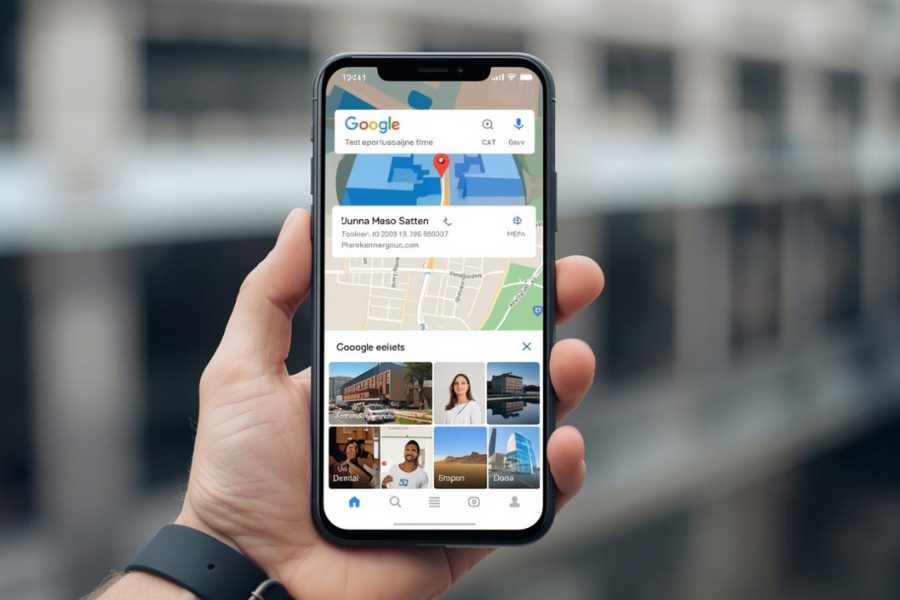
We all know how important it is to be ranked well in Google so use their free services to advertise your business to the max.
Sign up for a Google account and get your business listed for free on Google Places, and then set yourself up a Google business page.
Google currently holds a massive 90% share of the internet search market, so it makes sense to use all its free services to the maximum.
Although Google is the king of the internet search world, there are other useful sites that you should try to be listed on, such as Yahoo.co.uk and Bing.com.
4) Get listed with consistent citation and NAP listings
A citation link is a reference to your name, address and phone ( NAP ).
Google will take citation links into account when they evaluate your website. However, unlike normal backlinks, a citation link does not have to point back to your website; some citations are written in simple plain text.
Your NAP listing should match the information on your website and Google Business Profile page.
For example, here is a correct NAP listing for a meat company in London.
ABC Meat Company, 1 High Street, London, BN1 ABC, 0044 1234 567899
And by consistent, it means you should keep to the same format when posting your NAP details, and not change it to ABE Meats Ltd, 1 The High Street, London, UK, Tel 1234567899, or any other format that may confuse Google and other search engines.
Most people believe that the only place to post a citation link is on directories; however, this is not the case, as it is possible to post them on blogs, forums and social media sites.
Some of the most popular directories best used for local citation links in the UK include yell.com, yelp.co.uk, thomsonlocal.com, hotfrog.co.uk and scoot.co.uk.
5) Engage users via blogs, forums and social media

Search for relevant blogs and forums in your area where you can post your own content, leave a comment or offer advice and information.
A delicatessen in East London could offer recipes to the local community or offer advice to mums on how to cook a meal for two on the cheap.
Social media is equally important, as you may also wish to let people in the area know of a very special 2 for 1 deal or offer something for free with every £10 spent in your shop.
Importantly, though, Social Media is about social engagement and being friendly; it’s not only about me, me, me.
Try posting a selection of images, videos and fun stuff to help and engage people, especially your target audience.
6) Create local pages to target local keywords
Create high-quality, relevant content for your blog or website that engages and helps people using targeted local keywords.
Write content that is aimed at the local trade, mention local activities and events and people that have been in the news in your area.
This technique is the bedrock of any good SEO marketing campaign.
And remember to mention and link to other well-respected businesses and people in your community, as this increases your network, lets others know you exist, and shows that you are aware of what’s happening locally and that you care about your community.
And most importantly, write for your readers, not for the search engines.
Your articles should be well-written, relevant and easy to read. If a 9-year-old finds your content hard to get through, then most probably your readers will too.
We do not read webpages as we do printed text; we browse quickly through the content, latching onto headings, subheadings, bullet points and images.
Paragraphs full of complicated words set in overly long sentences will bore your readers, so keep it short and to the point.
Any words and information that are purely there to fill out the page and are unhelpful are best left out; people don’t like waffle!
If you don’t have anything to say, then best not to say anything.
7) Encourage your customers to leave reviews

Good reviews and testimonials are invaluable these days and act as a vote of confidence to others who may be interested in your services or products.
However, pestering your customers for a positive review is not a good idea. Here then are some SEO techniques to help encourage your customers to do so.
1) If you sell products online, place a small review link by the product
2) Put other reviews or testimonials in a prominent position on your website with a link that may encourage others to do the same.
3) Publish all reviews, good or bad. If people see only perfect reviews, it may look unnatural and backfire.
4) Sending a customer an email immediately after they have just received your product and are still excited about their new purchase is a good time to say thank you and ask for their valued feedback.
5) Reviews come in many shapes and forms, you may have received a positive email or letter from a customer with valued feedback, you can then simply ask the client if they do not mind it being used on your website as a testimonial.
6) Turn feedback into reviews. This can be gathered from emails, letters, posts, forums and social media.